In every procurement discussion in the UAE right now and ISO certification will be mentioned in the initial few minutes. What was once a nice-to-have credential for larger corporations has now become a basis requirement for construction, logistics, healthcare and food production technology. The rate at which local companies are striving to become certified has increased considerably over the last couple of years.Government contracts are the primary driver of the Demand
A significant portion of the present push comes from government and semi-government tendering requirements. Most public sector contracts in the Emirates now require an ISO certification as a mandatory prequalification certificate rather than the optional element, which means that those without it are effectively excluded from bids before price or capability even enter the discussion.
International Trade Partners Expect It as a Standard
The UAE's role as a regional logistics and trade center means that an increasing proportion that local businesses do business with international counterparts, and those suppliers increasingly consider ISO certification as a fundamental confidence signal, rather than a distinction. A European or North American buyer evaluating a supplier based in the UAE may choose to shortlist dependent on whether they have an acknowledged management system certificate has been in place. it gives them a familiar standard to refer to regardless of how much they are familiar with the local market.
Free Zones are actively encouraging the Certification
A few of the biggest UAE free zones have begun to offer certification as part of their business set-up packages Recognizing that certified tenants will attract higher quality clients and expand faster. This kind of support from institutions, coupled with real competitive pressure has transformed the concept of certification from an issue of specialized considerations to something more akin to standard business practices.
Risk and Insurance Considerations Are Making an appearance in the market.
Insurers operating in UAE industry are increasingly factoring management system certification into their risk assessments, particularly for areas such as manufacturing and construction where the failure to maintain safety and quality expose them to significant liability. A certified safety or quality management system provides insurers with an official basis for the pricing of risk. A few have begun to offer better conditions to applicants who have been certified due to this.
The Cost of Certification Has fallen
Competition among certification bodies and consultants working in the UAE is bringing prices down dramatically compared to 10 years back, making certification affordable to smaller and medium-sized businesses that had thought it was only available to large corporations. This shift in affordability opens the door for a wider array of companies pursuing certification for the first time.
Different Standards Suit Different Businesses
A diverse range of businesses do not require the same certification and understanding the standard that will be used is usually the most difficult thing to figure out. A construction firm's objectives around safety management differ to a software firm's requirements in terms of security for information. This is why there is a growing demand in a variety of standards, rather than focusing on only one.
What does this mean for companies? Are they still on the fence?
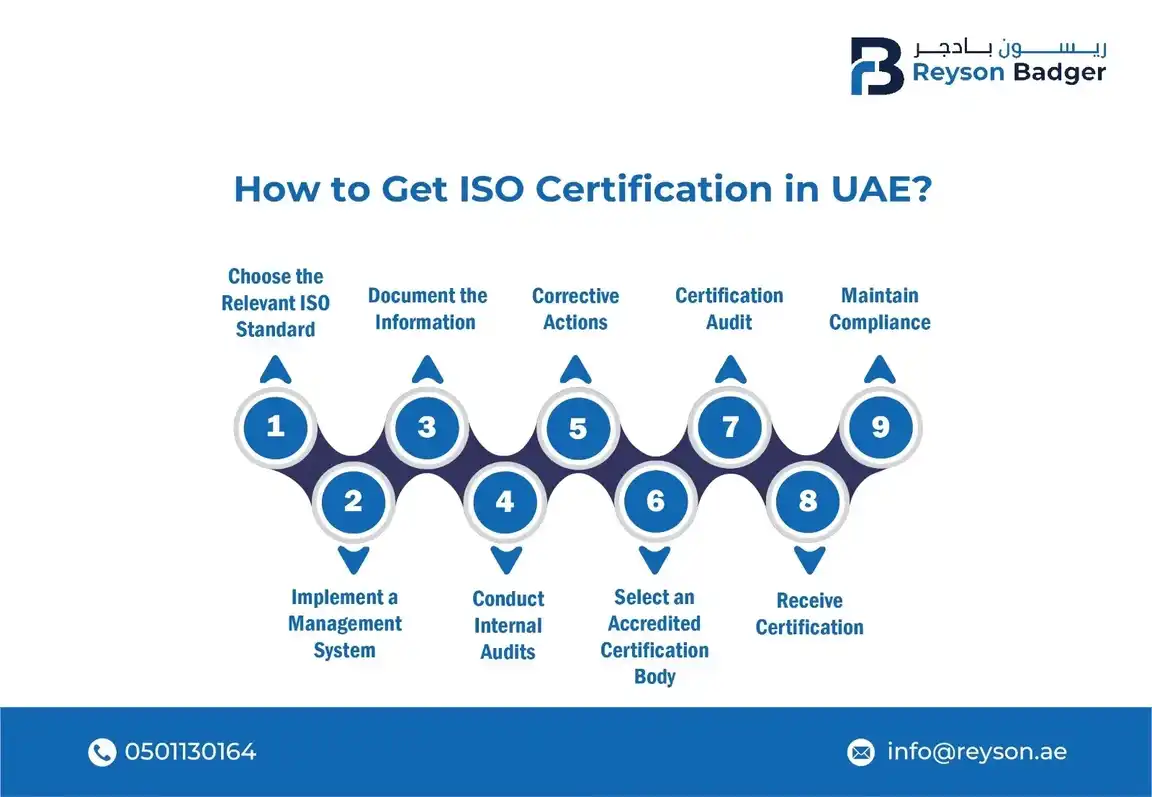
For those who are still debating whether certification is worth considering The reality of 2026 is that question has shifted from whether or not competitors have certification to how many potential opportunities are missed without certification. It usually starts through a gap analysis based on the applicable standard, following a structured implementation period before a formal external audit. And the entire process is a lot simpler than even five years ago.
The Talent Market is Responding Too
Certification has become central to how UAE businesses function, the local talent market is developing around quality environmental and safety positions, with more experts being certified as lead auditors and Implementation qualifications than at any time before. This has made it easier for businesses to hire internal employees capable of sustaining a an effective management system for a long time beyond the time that their initial accreditation program finishes, rather than the needing to rely entirely on external consultants indefinitely.
Multinational Companies Are Setting the Regional Tone
Many of the multinational companies that have regional or Middle East headquarters out of the UAE bring their current global standard requirements for certification to their local counterparts, expecting local suppliers as well partners to adhere to the same standards. This has had a notable knock-on effect, since local businesses who supply into these supply chains from multinational companies often have certification requirements descending from expectations of the client that came from somewhere outside the UAE itself.
Certification is Increasingly viewed as a Growth Facilitator Not only for Compliance
Perhaps the most important shift in perception over the last few years is that more UAE businesses are now viewing certification as something that actively assists growth, by opening up tender eligibility and international partnership opportunities, rather than viewing it purely as a cost to ensure compliance. This revision has made this expense much more easily to justify internally since it links directly with revenue opportunity rather than merely a part the compliance budget.
What is to expect in the years in the years ahead
With the current direction, it seems reasonable to consider that ISO certification will continue moving from a competitive advantage toward an outright market entry requirement in an increasing variety of UAE industries over the next years. Businesses that have a head start on this change now, rather than waiting until certification becomes unavoidable, generally feel the process is less stressful and their advantage in competitive positioning is considerably better.
How long will the whole process generally takes
The entire process beginning with the gap assessment and ending with certification can take anywhere from 3 to 9 months, dependent on the size of business, current process maturity, and the speed with which internal teams can take on necessary adjustments. Businesses under real pressure often try to reduce this duration significantly, however, rushing the implementation process will produce a management system that fails at the very first audit, which makes a more realistic timeframe a real investment.
The increase in ISO certification in the UAE indicates a market is past the stage of treating health and safety as an internal choice and has now accepted it as a basic condition of doing business with a serious attitude, both locally and internationally. Any business that is ready to start, the best next stage is to have an transparent conversation with an accredited certification body or an reputable consultant about which standard genuinely corresponds to current operational needs and requirements, rather than making assumptions just based on what the competitor shows on their website. No one in this momentum is showing any signs of slowing that makes the current date a truly sensible time for businesses that are still considering certification to move from consideration to decision. Have a look at the top ISO 27001 Certification for blog examples.
ISO 20000 Certification: What It Can Mean For It Services Firms And Providers From The UAE
When the United Arab Emirates' IT service industry has gotten more mature, clients have become more demanding about how service providers manage their operations, and not simply the technology they employ. ISO 20000, the international standard for IT service management, has become an increasingly common way for UAE IT service providers to show that their service is truly structured and not relying on the expertise of individual staff members alone.What ISO 20000 Actually Covers
The standard discusses how an IT service provider organizes, delivers, monitors, and improves the services that it provides to customers. It includes areas such issue management, management for problems change management, and service level management. Rather than dictating specific tools or technologies they must provide a consistent, method of service delivery that doesn't solely depend on any single team member's individual expertise.
Why Clients are More Frequently Requesting It
UAE businesses that contract out IT services, whether it's infrastructure management, helpdesk support or software development, are increasingly seek assurance that the company's method of delivery is mature rather than informally managed. ISO 20000 certification gives procurement teams an independently verified signal of its maturity, decreasing dependence on sales pitches and references alone when evaluating potential providers.
How It Differs From ISO 27001
IT companies often believe that ISO 27001, the information security standard, covers the same grounds to ISO 20000, but the two standards tackle distinct concerns. ISO 27001 focuses specifically on safeguarding assets of information and reducing risk to security, and ISO 20000 focuses on the broader quality, consistency, and the reliability of IT service delivery in general, as well as many mature UAE IT companies follow both standards to cover these distinct but complementary areas.
Issue Management and Incident Management Get Special Attention
Auditors assessing ISO 20000 compliance pay close review of how a company responds to service issues when they occur, including the speed at which issues are discovered and communicated to the affected customers addressed, and then analysed in the aftermath to prevent recurrence. An organization that can demonstrate an organized and consistent approach to incident handling, rather than an ad-hoc solution that changes depending on what personnel are accessible, can meet this aspect of the norm far more convincingly.
Service Level Management requires a genuine Measurement
The standard demands that providers identify clear service levels targets as well as genuinely measure performance against them, and apply that information to motivate improvement rather than treating service level agreements as static documents. This will require a mature internal monitoring and reporting capabilities which is often one of the primary problems that new applicants need to fix during the process.
It is the Certification Process in IT Services Providers
Like other management systems standards the route to ISO 20000 certification begins with a gap evaluation against the standards' requirements. Following that, the installation of all necessary processes as well as documentation and monitoring capabilities, an internal audit, and finally a two-stage audit of certification by an external auditor. The annual audits that monitor the system confirm the system of managing services is actually operational and not just as a paper.
Competitive Advantage in a Competitive Market
The market for IT services in the UAE is very crowded. ISO 20000 certification gives providers an authentic, independently verified method to distinguish their offerings from competitors that make similar claims about the quality of their services without a formal verification from outside them. For those who compete for larger, better-equipped clients particularly, certification increasingly serves as a base expectation instead of an optional distinguishing factor.
Integrating IT Frameworks with Existing Frameworks
Many UAE IT providers work within established frameworks like ITIL to guide service management, or ISO 20000. ISO 20000 aligns closely enough to these frameworks that companies who are already following ITIL practices will often have a large portion of the foundations to become certified already in the works. This makes it easier to implement effort for businesses who have already invested in structured practices for managing service informally.
A Special Focus on Change Management
Modifications without control to IT systems and infrastructure are the main cause of delays in service. ISO 20000 places considerable emphasis on standardized processes for managing change that consider the impact and risk prior to implementing changes, rather than allowing unplanned changes that increase the likelihood of disruptions that occur unexpectedly and impact customers.
What are the things that clients should look for In evaluating a Certified Provider?
Clients evaluating IT suppliers that hold ISO 20000 certification should still ask specific questions about how these processes work day-to day, rather than simply assuming that the certification assures good service. A company that is truly mature will happily walk through specific instances of how their incident management or change control procedures performed during the actual event, rather than speaking only using general phrases about the certification its own.
Moving Forward as the market gets more mature
As the UAE's IT-related services sector grows and customer requirements increase, ISO 20000 certification seems to be a differentiator toward a genuine normal expectation of providers operating at the higher-end end that market, similar to the pattern that was already evident with ISO 27001 in information security. Businesses that invest in efficiency in their service management today are likely to find themselves considerably better positioned as that shift continues.
The Capacity Management Process is Often Misunderstood
Beyond the management of change and incident, ISO 20000 also expects providers to genuinely plan for future capacity requirements rather than responding only after performance issues emerge. UAE firms that provide rapid growth customers particularly benefit from developing this type of capacity planning for the future in their service management system rather than making it an extra-curricular task.
To UAE IT providers who are looking to decide their options to determine if ISO 20000 is worth pursuing It is the opportunity to show an actual level of service management maturity in the eyes of increasingly sophisticated customers, while also surfacing internal process issues that, when addressed are likely to enhance service delivery, regardless of the certificate itself. For UAE IT companies that are committed to sustainable competitiveness, building the kind of true service management maturity ISO 20000 represents is likely to be a significant factor over the next few years as it is now. This doesn't have to start by scratch, as those have already established a solid structure for their operations and tend to find a good portion of the basework is already in place and just requires formalization to meet the standard's specific specifications. Companies who begin this work now are likely to have a better chance of success as the expectations of clients continue to increase. View the top rated ISO Certification Abu Dhabi for site tips.
